


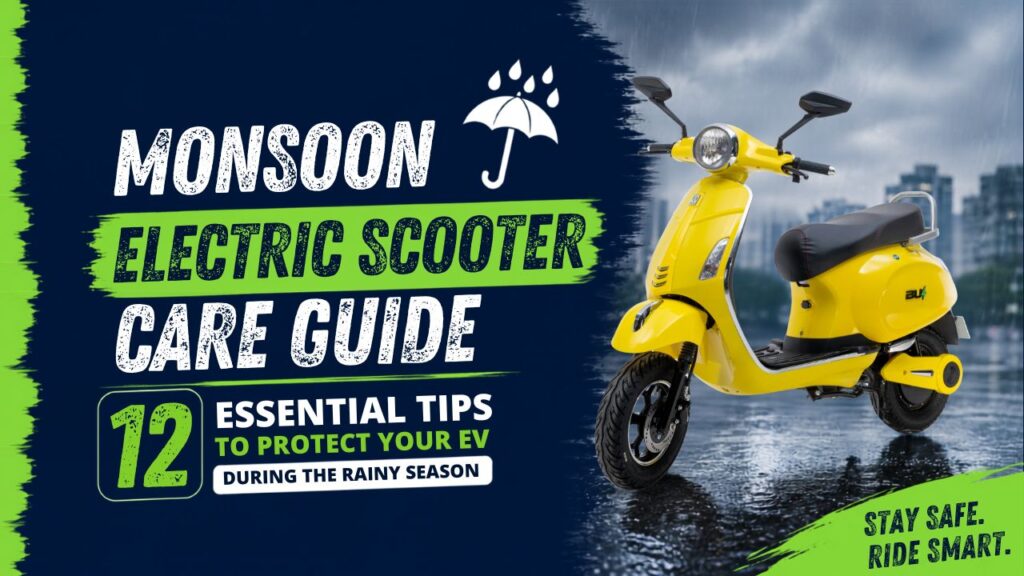
The arrival of the monsoon brings cooler weather, greener landscapes, and much-needed relief from the summer heat. However, for electric scooter owners, the rainy season also introduces challenges such as slippery roads, waterlogged streets, reduced visibility, and the need for extra care to keep their EV in top condition.
The good news is that modern electric scooters are designed to handle everyday rain when used responsibly. With advanced battery technology, waterproof electrical components, and intelligent Battery Management Systems (BMS), today’s EVs are safer and more reliable than ever. Even so, regular maintenance and smart riding habits remain essential for ensuring safety, performance, and long battery life.
Can You Ride an Electric Scooter in the Rain?
Yes. Most modern electric scooters are built with weather-resistant components and are capable of handling normal rainfall. However, “water-resistant” does not mean “waterproof.”
Heavy flooding, prolonged exposure to water, or riding through deep puddles can still damage electrical systems, connectors, bearings, and other mechanical components.
The key is to ride carefully, maintain your scooter regularly, and avoid unnecessary exposure to standing water.
1. Inspect Your Braking System Before Every Ride
Braking performance becomes even more important during the monsoon because wet roads reduce tyre grip and increase stopping distance.
Before heading out:
- Check brake pads for wear.
- Ensure brake discs are clean.
- Test both front and rear brakes.
- Listen for unusual noises.
- Make sure brake levers respond smoothly.
If braking feels weak or inconsistent, have your scooter inspected before riding.
2. Check Tyre Condition and Air Pressure
Tyres are your scooter’s only contact with the road.
Proper tyre maintenance improves traction and reduces the risk of skidding on wet roads.
Before riding:
- Check tyre pressure as recommended by the manufacturer.
- Inspect tread depth.
- Look for cuts, cracks, or embedded objects.
- Replace worn tyres immediately.
Good tyres provide better grip, shorter braking distances, and improved handling during rain.
3. Avoid Waterlogged Roads
One of the biggest mistakes riders make during the monsoon is attempting to cross flooded roads.
Even if your electric scooter has good water resistance, deep water can:
- Damage electrical connectors
- Affect wheel bearings
- Enter motor components
- Reduce braking efficiency
- Hide potholes and road hazards
If the water level reaches above the wheel hub, it’s safer to choose another route.
4. Keep the Charging Port Dry
The charging port is one of the most important areas to protect.
Before plugging in your charger:
- Ensure the charging port is completely dry.
- Wipe away any moisture with a clean cloth.
- Close the charging port cover securely after use.
- Never charge immediately after riding in heavy rain.
Allow the scooter to dry naturally before charging.
5. Use Only the Original Charger
Using the charger supplied by the manufacturer helps protect the battery from voltage fluctuations and improper charging.
Avoid:
- Cheap duplicate chargers
- Damaged charging cables
- Loose electrical sockets
- Outdoor charging during rainfall
Charging indoors in a dry, well-ventilated area is always the safest option.
6. Wash Your Scooter After Rainy Rides
Rainwater often carries mud, dust, chemicals, and road salt that can accumulate underneath your scooter.
After riding:
- Rinse off mud using clean water.
- Use a soft cloth with mild soap.
- Avoid directing high-pressure water at electrical components.
- Dry the scooter thoroughly before storing it.
Keeping the scooter clean helps prevent corrosion and maintain its appearance.
7. Dry Electrical Areas Carefully
Although electric scooters are built to withstand rain, moisture should never remain around electrical connections.
Pay special attention to:
- Charging socket
- Battery compartment (if removable)
- Display console
- Wiring connections
- Switches and buttons
A microfiber cloth works well for removing trapped moisture.
8. Park Under Shelter Whenever Possible
Continuous exposure to rain is not ideal for any vehicle.
Whenever available, park your electric scooter:
- Inside a garage
- Under a covered parking area
- Beneath a weatherproof shelter
If covered parking isn’t available, use a high-quality waterproof scooter cover after the scooter has cooled down.
9. Ride Smoothly on Wet Roads
Monsoon riding requires a calmer riding style.
Follow these safe riding practices:
- Reduce speed.
- Maintain extra distance from other vehicles.
- Avoid sudden acceleration.
- Brake gradually.
- Slow down before corners.
- Stay alert for painted road markings, metal covers, and loose gravel, which become slippery when wet.
Smooth riding improves both safety and battery efficiency.
10. Monitor Battery Health
The battery is the heart of every electric scooter.
Thanks to the Battery Management System (BMS), modern lithium-ion batteries continuously monitor:
- Temperature
- Voltage
- Charging status
- Cell balance
- Current flow
Even with these intelligent safety features, riders should:
- Avoid charging a hot battery immediately after riding.
- Never expose the battery to standing water.
- Follow the recommended charging schedule.
- Contact an authorised service centre if warning lights appear.
11. Schedule Regular Service During Monsoon
Rain can accelerate wear on moving parts.
Routine servicing helps detect problems before they become costly repairs.
A monsoon inspection should include:
- Brake adjustment
- Suspension check
- Tyre inspection
- Electrical diagnostics
- Bearing lubrication
- Fastener tightening
- Battery health assessment
Regular maintenance ensures your scooter performs safely throughout the season.
12. Stay Updated on Battery Safety Guidelines
As electric mobility continues to grow in India, battery safety standards have become more stringent. Manufacturers now use improved battery designs, advanced Battery Management Systems (BMS), and enhanced testing procedures to improve reliability and reduce risks.
As a rider, you can contribute to battery safety by:
- Following the manufacturer’s charging instructions.
- Avoiding unauthorized battery modifications.
- Using genuine replacement parts.
- Getting repairs only from trained technicians.
- Reporting any unusual battery behavior, such as excessive heat, swelling, or persistent warning indicators, to an authorized service centre immediately.
Following these practices helps ensure your scooter remains safe and performs reliably throughout its lifespan.
Why Monsoon Maintenance Matters
A well-maintained electric scooter offers several advantages during the rainy season:
- Improved rider safety
- Better braking performance
- Longer battery life
- Increased riding efficiency
- Lower maintenance costs
- Reduced risk of unexpected breakdowns
- Greater reliability for daily commuting
A little preventive care today can help you avoid expensive repairs tomorrow.
Why Choose BU4 Auto?
At BU4 Auto, we design electric scooters that combine performance, efficiency, and safety for Indian roads. Our scooters feature advanced lithium-ion battery technology, intelligent Battery Management Systems (BMS), and durable engineering to support reliable everyday commuting in varying weather conditions.
We also encourage responsible riding and regular maintenance to help customers enjoy maximum battery life, consistent performance, and peace of mind throughout every season.
Conclusion
Monsoon weather doesn’t have to interrupt your electric mobility journey. With proper maintenance, careful riding habits, and timely servicing, your electric scooter can continue to deliver safe, efficient, and dependable performance even during the rainy season.
Simple steps such as checking your brakes and tyres, keeping the charging port dry, avoiding waterlogged roads, and following recommended charging practices can significantly improve the longevity and reliability of your EV.
At BU4 Auto, we’re committed to making electric mobility smarter, safer, and more dependable. By taking a little extra care during the monsoon, you can enjoy every ride with confidence—rain or shine.
Ride Smart. Ride Safe. Ride Electric with BU4 Auto.