

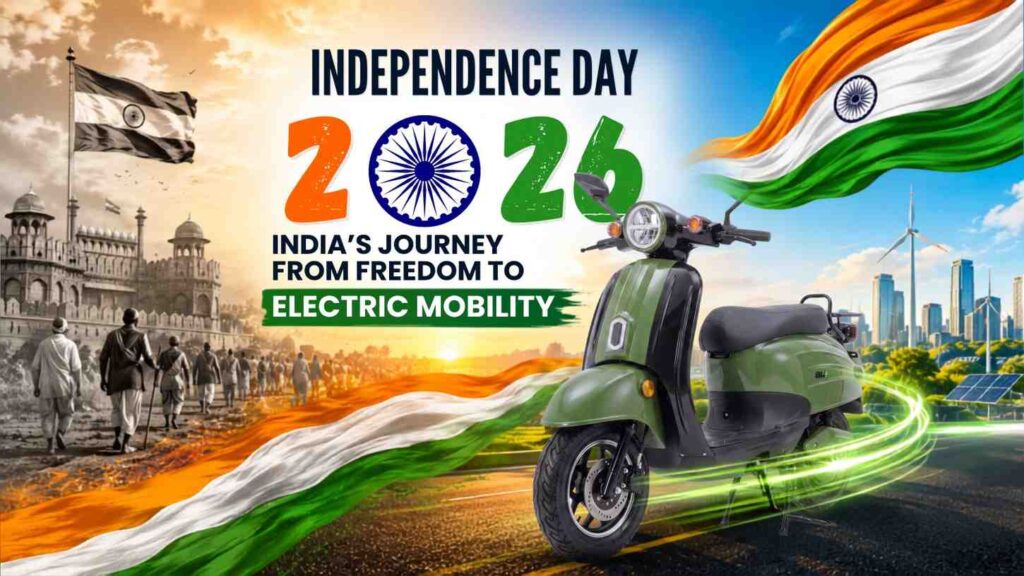
In 1947, India gained political independence. Nearly eight decades later, the nation is working toward another important milestone—energy independence.
Today, every electric scooter on Indian roads represents more than a mode of transportation. It represents India’s commitment to cleaner cities, reduced fuel imports, advanced technology, and the vision of an Atmanirbhar Bharat (Self-Reliant India).
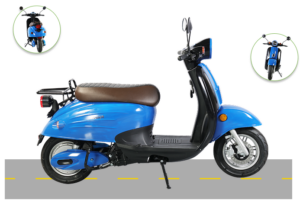
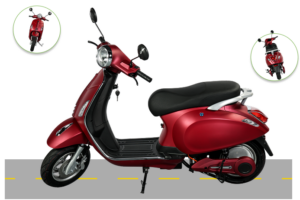
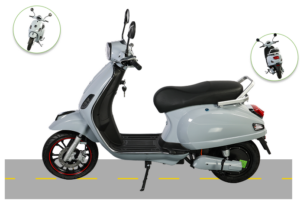
At BU4 Auto, we are proud to be part of this transformation by manufacturing Made-in-India electric scooters that support India’s green mobility revolution.
India’s Journey: From Independence to Innovation
When India became independent on 15 August 1947, the country faced enormous challenges. Transportation infrastructure was limited, industries were still developing, and personal vehicles were considered a luxury.
Over the decades, India transformed itself into one of the world’s largest automobile manufacturing hubs.
The journey looked something like this:
- 1947–1970: Building India’s industrial foundation after independence.
- 1980s: Scooters and motorcycles became the preferred mode of transport for Indian families.
- 1990s: Economic reforms accelerated automobile manufacturing and increased vehicle ownership.
- 2000s: Rising fuel prices and increasing pollution highlighted the need for cleaner transportation.
- 2010s: Electric mobility entered the mainstream with improved battery technology and government support.
- 2020s: India emerged as one of the fastest-growing electric two-wheeler markets in the world.
Every decade has brought India closer to smarter and more sustainable mobility.
The History of Electric Scooters and Bikes in India
India’s electric mobility journey didn’t begin overnight—it has evolved over nearly three decades.
The Early Years (1990s)
The first electric scooters appeared in India during the late 1990s. However, they were limited by:
- Heavy lead-acid batteries
- Low riding range
- Slow charging
- Limited customer awareness
- Minimal charging infrastructure
As a result, adoption remained low.
The Turning Point (2010–2015)
Technology began improving rapidly.
Lithium-ion batteries became more efficient, lighter, and longer-lasting. Electric vehicles started offering better performance and lower maintenance costs.
At the same time, consumers became increasingly aware of fuel savings and environmental concerns.
Government Support Changed Everything
Recognizing the importance of clean transportation, the Government of India introduced several initiatives to accelerate EV adoption, including:
- FAME (Faster Adoption and Manufacturing of Electric Vehicles) schemes
- Production Linked Incentive (PLI) programs
- Battery manufacturing initiatives
- Charging infrastructure development
- State-level EV policies and incentives
These efforts encouraged manufacturers to invest in Indian EV production and made electric mobility more accessible to consumers.
The EV Revolution (2020–2026)
Today, electric scooters are no longer an alternative—they are becoming the preferred choice for daily commuting.
Modern EVs offer:
- Longer riding range
- Faster charging
- Smart connected features
- Lower running costs
- Improved safety
- Better performance
India is now among the fastest-growing electric two-wheeler markets globally, with millions of riders choosing electric mobility every year.
Independence Today Means Energy Independence
Political freedom was achieved in 1947.
Today, India is working toward energy independence by reducing its dependence on imported crude oil.
Every electric scooter helps India by:
- Reducing fuel imports
- Improving air quality
- Supporting renewable energy adoption
- Encouraging domestic manufacturing
- Creating employment opportunities
- Strengthening the Indian economy
Choosing an EV is not just a personal decision—it is a contribution to the nation’s future.
BU4 Auto: Driving India’s Electric Future
At BU4 Auto, we believe that the future of mobility should be built in India, for India.
Our commitment is to manufacture electric scooters that combine innovation, reliability, affordability, and sustainability.
With features like:
- Proudly Made in India
- Up to 120 km riding range (model dependent)
- Convenient home charging
- 3-Year Warranty
- Low running and maintenance costs
- Zero tailpipe emissions
BU4 Auto is helping Indian riders embrace a cleaner and smarter future.
Freedom from Petrol. Freedom from Pollution.
Every Independence Day reminds us that freedom comes with responsibility.
Today, that responsibility includes making choices that protect our environment and strengthen our nation.
By switching to electric mobility, you gain:
- Freedom from rising fuel prices
- Freedom from frequent maintenance
- Freedom from harmful emissions
- Freedom to ride sustainably
And together, we move India closer to becoming a global leader in clean transportation.
Looking Ahead: India’s Next Independence
The next chapter of India’s journey is not about political freedom—it is about technological leadership, clean energy, and sustainable mobility.
Electric vehicles will play a defining role in achieving:
- Net-zero ambitions
- Cleaner cities
- Stronger domestic manufacturing
- Energy security
- Global EV leadership
Companies like BU4 Auto are proud to contribute to this national mission by building electric mobility solutions that are designed and manufactured in India.
Happy Independence Day from BU4 Auto
This 15th August, let us celebrate not only the freedom won by our freedom fighters but also the freedom we can create for future generations—freedom from pollution, rising fuel costs, and dependence on fossil fuels.
Every electric ride is a step toward a cleaner, greener, and stronger India.
Celebrate Independence. Choose Sustainability. Ride Electric.
BU4 Auto – Be Bold. Be Electric.