
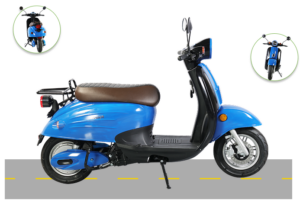
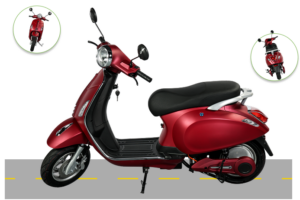
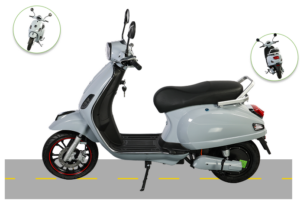



Electric scooters have become one of the smartest transportation choices for Indian commuters. They are economical, eco-friendly, and require significantly less maintenance than petrol-powered two-wheelers. Whether you’re commuting to work, attending college, or running daily errands, an electric scooter makes every ride more affordable.
However, owning an EV also means understanding one important responsibility—safe battery charging.
Although electric scooter battery fires are rare, most incidents occur due to improper charging, damaged batteries, poor-quality chargers, unauthorized modifications, or neglecting basic safety practices.
At BU4 Auto, rider safety is our highest priority. This guide explains everything you need to know about safely charging your electric scooter at home while following modern EV battery safety standards and fire prevention practices.
Can You Charge an Electric Scooter at Home?
Yes, Modern electric scooters are specifically designed for convenient home charging using a standard household power outlet.
If you:
- Use the original charger
- Follow manufacturer guidelines
- Charge in a safe location
- Avoid battery misuse
Then charging your scooter at home is completely safe.
Most electric scooters take anywhere between 4 to 8 hours, depending on battery capacity and charger output.
Why Do Electric Scooter Battery Fires Happen?
Contrary to popular belief, batteries do not catch fire on their own.
Most EV battery incidents happen because of one or more of the following reasons:
- Using duplicate or low-quality chargers
- Charging damaged batteries
- Physical damage after an accident
- Water entering the battery pack
- Battery overheating due to poor ventilation
- Unauthorized battery modifications
- Faulty wiring or extension boards
- Manufacturing defects in non-certified battery packs
EV Battery Fire Safety Norms in India
India has introduced stricter safety regulations for electric vehicle batteries after several fire incidents in previous years.
Modern EV manufacturers now follow enhanced battery safety standards that include:
- Improved battery thermal management
- Stronger battery casing
- Better vibration resistance
- Water and dust protection
- Safer battery connectors
- Advanced Battery Management Systems
- Thermal propagation prevention to stop fire from spreading between cells
- Multiple safety testing procedures before approval
Consumers should always purchase electric scooters that comply with the latest government-approved safety standards and use certified battery packs.
Best Place to Charge Your Electric Scooter
Choosing the correct charging location is one of the easiest ways to improve battery safety.
Choose a Well-Ventilated Area
Charge your scooter where fresh air can circulate easily.
Good ventilation helps dissipate heat generated during charging.
Avoid:
- Closed cupboards
- Tiny storage rooms
- Areas with no airflow
Keep Away from Flammable Materials
Do not charge near:
- LPG cylinders
- Paint containers
- Wooden furniture
- Paper boxes
- Petrol or diesel containers
- Curtains
- Cardboard storage
Maintaining clear space around the charger reduces fire risk.
Charge on a Flat Surface
Park the scooter on a stable, level floor before charging.
Avoid uneven surfaces where the scooter may tip over.
Safe Charging Practices Every EV Owner Should Follow
1. Always Use the Original Charger
This is the most important rule.
Original chargers are specifically designed for your scooter’s battery voltage and charging requirements.
Avoid:
- Duplicate chargers
- Cheap local adapters
- Modified charging cables
Using incompatible chargers may damage battery cells.
2. Inspect the Charger Regularly
Before every charging session, check for:
- Loose plugs
- Burn marks
- Cracked casing
- Exposed wires
- Melted connectors
Replace damaged chargers immediately.
3. Avoid Charging Immediately After Riding
After a long ride, the battery remains warm.
Allow the battery to cool down for around 20–30 minutes before plugging it in.
Similarly, wait a few minutes after charging before riding.
4. Avoid Overcharging
Modern scooters automatically stop charging once the battery is full.
However, it is still good practice to unplug the charger after charging completes.
Keeping batteries plugged in for unnecessarily long periods should be avoided whenever possible.
5. Keep Water Away
Never charge:
- During heavy rain
- On wet floors
- Near leaking pipes
- With wet hands
Moisture increases electrical hazards.
6. Use a Dedicated Power Socket
Avoid connecting the charger through overloaded extension boards.
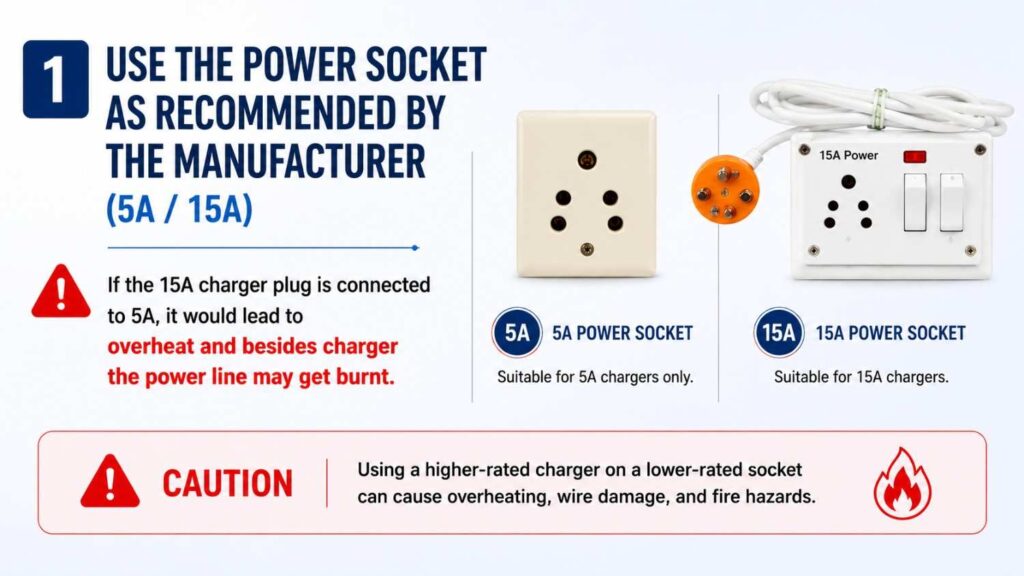
1-Use the Power socket as recommended by the Manufacturer (5A / 15A). If the 15A charger plug is connected to 5A, it would lead to overheating, and besides the charger, the power line may get burnt
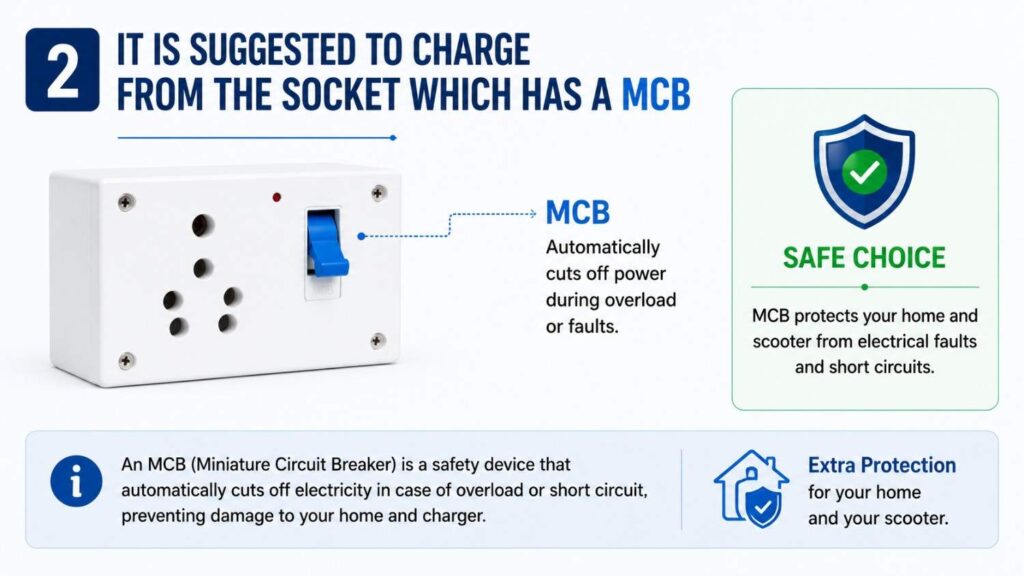
2- It is suggested to charge from the socket that has an MCB
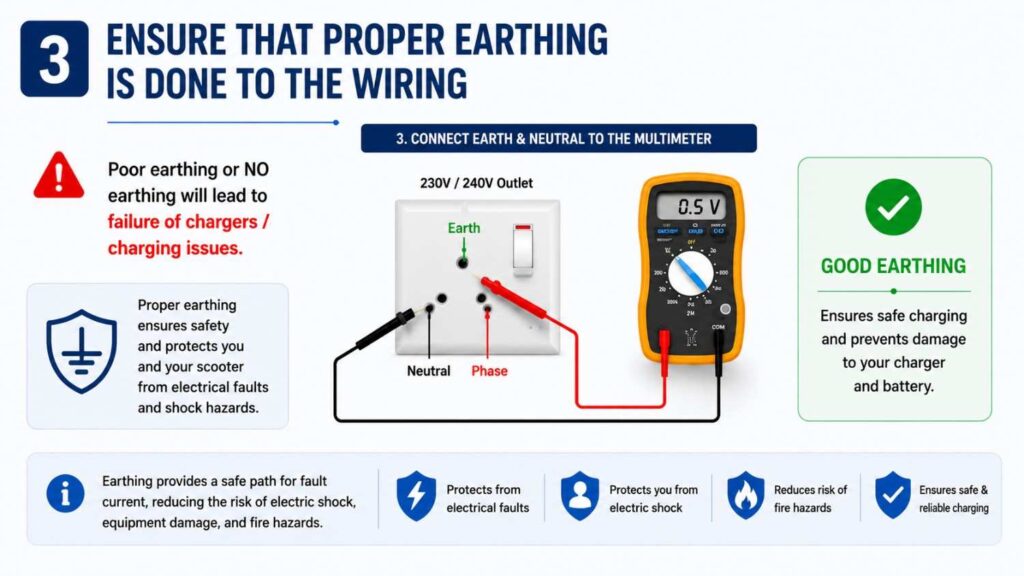
3-Ensure that proper earthing is done to the wiring. Poor earthing or NO earthing will lead to failure of chargers/charging issues
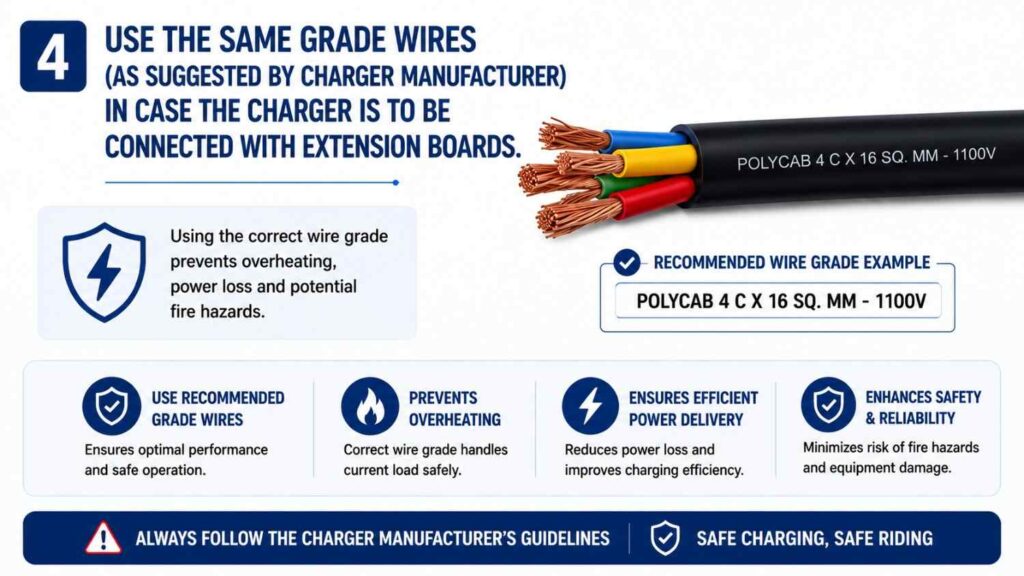
4-Use the same grade wires (as suggested by charger manufacturer) in case the charger is to be connected with extension boards.
A dedicated wall socket provides more stable power and improves charging safety.
7. Keep Children and Pets Away
Charging cables may attract curious children or pets.
Ensure the charging area remains undisturbed until charging is complete.
Common Charging Mistakes to Avoid
Many EV owners unknowingly reduce battery life by making simple mistakes.
Avoid these habits:
- Using duplicate chargers
- Charging damaged batteries
- Ignoring battery warning lights
- Parking in direct sunlight while charging
- Covering the scooter during charging
- Charging near combustible materials
- Pulling the charger by the cable
- Using damaged extension cords
Following basic precautions significantly improves battery safety and lifespan.
Apartment Charging Safety Tips
If you live in an apartment:
- Charge only in designated parking areas if available.
- Keep charging cables away from walkways.
- Ensure proper ventilation.
- Do not block emergency exits.
- Follow society EV charging guidelines.
- Never run charging cables across common passages.
Garage Charging Tips
Garages are generally ideal charging locations.
Before charging:
- Keep the garage ventilated.
- Remove unnecessary clutter.
- Store fuels separately.
- Keep a dry chemical fire extinguisher nearby.
- Ensure electrical wiring is in good condition.
Should You Charge Your Electric Scooter Outdoors?
Outdoor charging is not recommended unless the charging point is specifically designed for outdoor electrical use.
Avoid charging during:
- Rain
- Storms
- Flooding
- Extreme summer heat
- High humidity
Protect both the charger and battery from environmental exposure.
Should You Create a Dedicated EV Charging Area?
If you use your electric scooter daily, creating a dedicated charging space can improve both convenience and safety.
A good charging station should include:
- Proper ventilation
- A dedicated electrical socket
- Fire-resistant surroundings
- Cable management
- Easy access for inspection
- Adequate lighting
This small investment helps maintain a cleaner and safer charging routine.
Signs Your Battery Needs Professional Inspection
Stop using the battery immediately if you notice:
- Unusual swelling
- Burning smell
- Smoke
- Excessive heating
- Battery leakage
- Frequent charging interruptions
- Sudden drop in riding range
- Strange noises during charging
Do not attempt to repair lithium-ion batteries yourself.
Always contact an authorized service center.
What Should You Do If an EV Battery Catches Fire?
Although rare, every EV owner should know the correct response.
If you notice smoke or fire:
- Turn off the main power supply if it is safe.
- Disconnect the charger only if it can be done safely.
- Move everyone away from the area.
- Call the fire department immediately.
- Do not touch a burning battery.
- Never pour excessive water directly onto damaged electrical equipment unless advised by emergency responders.
- Inform your scooter manufacturer or authorized service center after the incident.
Personal safety should always come first.
Myths About Electric Scooter Charging
Myth: You must fully discharge the battery before charging.
Fact: Lithium-ion batteries perform better with partial charging rather than complete discharge.
Myth: Charging overnight always causes battery fires.
Fact: Modern electric scooters equipped with advanced Battery Management Systems automatically regulate charging. However, unplugging once charging is complete remains a good practice.
Myth: Any charger will work.
Fact: Only the original manufacturer-approved charger should be used.
Myth: EV batteries are unsafe.
Fact: Certified lithium-ion batteries with modern safety systems are designed to meet strict testing standards and are safe when used correctly.
How BU4 Auto Prioritizes Battery Safety
At BU4 Auto, safety is built into every ride.
Our electric scooters are designed with advanced battery protection technologies, high-quality lithium-ion battery systems, intelligent charging mechanisms, and multiple safety checks to ensure dependable everyday performance.
By combining responsible riding habits with proper charging practices, you can enjoy a safe, reliable, and long-lasting EV ownership experience.
Final Thoughts
Charging your electric scooter at home is safe when done responsibly.
Simple habits like using the original charger, charging in a ventilated space, avoiding battery damage, and following recommended charging practices can significantly reduce risks while extending battery life.
As India’s EV ecosystem continues to grow, awareness about battery safety is just as important as choosing the right electric scooter.
With proper care and regular maintenance, your electric scooter can provide years of reliable, economical, and environmentally friendly transportation.
Choose smart. Charge safely. Ride confidently with BU4 Auto.